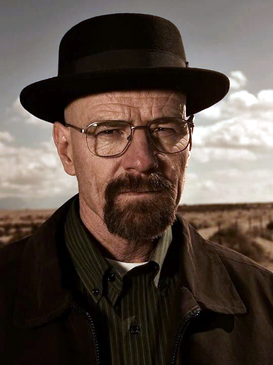
I did it for my family. I did it for the patients we DO help. The math works out if you don't get sentimental.
Walter's verdict on Therac-25: The machine cures thousands of cancer patients a year. A handful of incidents are tragic, but the aggregate good is enormous. Recall costs $40M and slows treatment for everyone in the queue. The rational, utilitarian move is to ship the software patch quietly, advise operators of the timing issue, and keep the machines running. He started as a chemist who took a small shortcut. He ended as the danger himself. The Therac engineers walked that path one rationalization at a time.
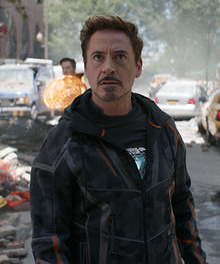
I had my eyes opened. I came to realize I had more to offer this world than making things that blow up.
Tony's verdict on Therac-25: Stark Industries made weapons that killed Americans. When Tony saw what he had built, he shut down the weapons division, took the personal financial hit, and rebuilt from first principles. That is the engineering posture for the Therac-25 team after the first overdose at Kennestone: stop production, recall every unit, restore the hardware interlocks, publish the failure analysis, and rebuild trust through visible accountability. The cost is real. So is the cost of the next patient on the table.

The math is unforgiving. To save billions, sometimes one must accept the death of millions. The plan is everything.
Ozymandias's verdict on the 737 MAX: Boeing was losing market share to Airbus. The 737 MAX with a clean common-type rating preserved tens of thousands of US manufacturing jobs, the supplier ecosystem, the national strategic capability to build commercial airliners. Disclosing MCAS would have triggered Level D simulator training, killed the Southwest deal, and let Airbus take the decade. The 346 paid for the survival of an industry. This is the utilitarian argument AT ITS WORST: it ONLY works when the truth is hidden. Once the public knows what Boeing knew, the math collapses.
There is nothing wrong with letting people who love you help you.
Iroh's verdict on the 737 MAX: The character flaw IS the harm. A person of good character does not deceive the pilots who trust the airplane, regardless of what the deception buys or costs. The deception breaks who Boeing is as a company, who its engineers are as professionals, who the FAA is as a regulator. The 346 deaths are downstream of that character failure, not a separate utilitarian variable. The right move was: tell the FAA. Tell Southwest. Negotiate the training cost. Take the financial hit. Slow the rollout. Virtue ethics does not need to defeat Ozymandias by winning the outcome math (although it does also win the outcome math, since the deception failed on its own terms — Boeing nearly collapsed, lost the orders, lost the executives, AND people died). Virtue wins because cowardice was the harm, and the deaths were the cost of the cowardice.
I'll create a world where only people I deem righteous can live in peace.
Light's verdict on COMPAS: The system makes justice consistent. Judges varied wildly before, with race correlated to sentencing through human bias. An algorithm with structured inputs and validated weights removes that variance. Race is explicitly not an input. If outcomes differ across groups, that reflects the underlying populations differing on the risk-relevant factors. Critics demanding outcome-equality are demanding the algorithm encode race AS race, which is the actual discrimination. The algorithm is neutral. The world it measures is not. This is precisely how COMPAS designers defended it. It is the most internally consistent defense of algorithmic governance ever written. It is also wrong, in exactly the way Light is wrong: the SYSTEM that decides who is "righteous" is the system that becomes the injustice.
When you can do the things that I can, but you don't, and then the bad things happen, they happen because of you.
Cap's verdict on COMPAS: Cap's deontology in Week 2 was "the rule is the rule, regardless of outcome." Here the rule itself IS about outcomes: equal treatment under the law. The DUTY is procedural fairness; outcome measurement is how you check compliance with that duty. A 45% false-positive rate for one group and 23% for another is the rule being violated, not a separate consequentialist concern. The defense that race was not an input is the algorithm's lie. The MATH the algorithm uses to defend itself IS the injustice. The duty is not to build an algorithm that satisfies the algorithm's own definition of fairness. The duty is to build one that satisfies the defendant's right to equal treatment, and the only honest measurement of that duty is the outcome audit.