Week 2 Lecture: Rights Through the Lens | Ethics in IT

Week 2 Lecture Companion · Ethics in IT
Rights Through the Lens
Week 2's real cases — Waymo v. Uber, Carpenter v. United States, Section 230 — dissected through the frameworks you met in Week 1.
Privacy. Expression. Property. Three rights, three real conflicts, six characters who can explain why the disagreement is the point.
15 Slides ~50 min 3 cases × 2 lenses each In-class assignment included
Slide 2 of 15 · Recap from Week 1
The Five Frameworks Go to Work
You met them last week through characters. Today they argue with each other about real cases.
Thanos
Utilitarianism
Greatest good for the greatest number.
Captain America
Deontology
Duty regardless of consequence.
Uncle Iroh
Virtue Ethics
What would a good person do?
Tony vs Steve
Social Contract
Negotiated rules for shared power.
Itachi / Ozymandias
Ends Justify Means
The math that wins, at terrible cost.
The move today
Take one case. Run it through two frameworks. Where they agree, you have signal. Where they disagree, you have the actual ethical question. Hard cases are exactly the ones where frameworks disagree — that's why they're hard.
Slide 3 of 15 · Three W2 Cases
Three Real Cases, Three Rights
Every Week 2 right has a defining real-world case. We'll dissect all three.
Case 1 · Intellectual Property
Waymo v. Uber (2017). Anthony Levandowski downloaded 14,000 files from Waymo, then joined Uber. $245M settlement. 18 months prison.
Lenses: Thanos vs Captain America
Case 2 · Privacy
Carpenter v. United States (2018). Police obtained 127 days of cell-site location data without a warrant. SCOTUS, 5-4: unconstitutional.
Lenses: Homelander vs Iroh
Case 3 · Freedom of Expression
Section 230 of the CDA (1996). 26 words that built the modern internet — and that everyone now wants to rewrite.
Lenses: Civil War vs Light Yagami
The pattern, applied three times
For each case: a setup slide that gives you the facts. Then a dual-lens slide that runs two frameworks at each other. Then a synthesis slide for what the IT professional carries away.
Slide 4 of 15 · Case 1: Intellectual Property
Waymo v. Uber: The Trade Secret War
A $245M settlement, 18 months in federal prison, and the question that splits Silicon Valley.
Anthony Levandowski was a Waymo (Google) self-driving engineer. Before he left in 2016, he downloaded 14,000 files — LiDAR designs, source code, supplier lists — onto his personal laptop. Six months later he co-founded Otto. Six months after that, Uber acquired Otto for $680M and put Levandowski in charge of Uber's self-driving program. Waymo sued. Discovery showed the downloads. Federal trade-secret theft conviction. 18 months. $245M paid by Uber to Waymo.
The narrative on Levandowski's side
Self-driving cars will save tens of thousands of American lives every year. Waymo's secrecy was slowing the technology. Faster competition saves more people. The math is brutal but it's real.
The narrative on Waymo's side
Years of R&D investment. Contracts signed. NDA executed. Trade-secret law is what makes investment in expensive R&D possible. Take that away and the next generation of innovation never gets funded.
The dilemma for the IT professional
You sign NDAs. You leave jobs. What did you build? Whose is it? Where does general knowledge end and trade secret begin? The legal line is clear after the lawsuit — it's never clear before.
The framing question for the next slide
Two frameworks. Thanos says: greatest good demands the technology spread faster. Captain America says: you signed the NDA, end of analysis. Which one is right? Or are both right about different things?
Slide 5 of 15 · Waymo × Two Lenses
Thanos vs Captain America
Utilitarian math vs deontological duty. Same facts, opposite verdicts.
Lens 1 · Utilitarianism
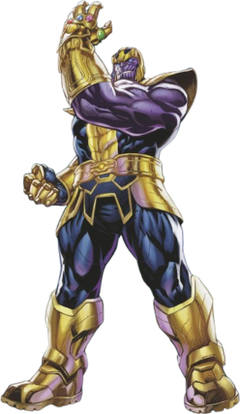
Thanos
"The hardest choices require the strongest wills."
Thanos wearing the completed Infinity Gauntlet

When I'm done, half of humanity will still exist. Perfectly balanced.

Thanos's verdict on Waymo v. Uber: Self-driving cars save 40,000 American lives a year. Anything that accelerates the technology — including bending IP rules — is justified by the aggregate lives saved. Property right of one corporation is a rounding error against population-scale mortality.
Lens 2 · Deontology
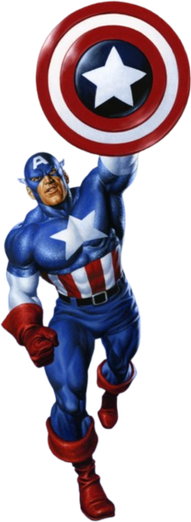
Captain America
"I can do this all day."
Captain America in Civil War uniform

You signed it. That settles it.

Cap's verdict on Waymo v. Uber: Levandowski signed an NDA. The promise was the moral act — not whatever utilitarian calculus he'd later run. Duty does not negotiate with outcomes. He stole property regardless of what self-driving cars might do for the world. The right action was: build new IP at the new job. The math doesn't enter into it.

The disagreement IS the lesson
Both frameworks are internally consistent. Both yield different verdicts. That's not a bug — that's exactly what frameworks are for. They surface the real tradeoff: do consequences override promises, or do promises override consequences? You can defend either answer. You cannot defend "I didn't think about it."
Slide 6 of 15 · Waymo: Takeaway
Waymo: Where This Leaves You
Two frameworks, one defensible posture for the working IT professional.
Default Posture
Captain America wins on this one — in employment ethics, the deontological framework is the working baseline. NDAs and trade-secret obligations are honored regardless of how compelling the consequentialist case looks. The reason: a society where promises are conditional on later cost-benefit calculations cannot fund R&D at all.
When Thanos Has a Point
Whistleblowing carves the exception. If an NDA covers up active harm (data the public should know, fraud, deaths-in-progress) the utilitarian case can override the deontological default. Levandowski was not a whistleblower. He was a competitor. The distinction matters.
The Gray Zone
What's in your head is yours. Knowledge, skills, general approaches — you take with you. What's on your laptop is theirs. The line between general knowledge and trade secret is the entire IP-portability fight. Document carefully; download nothing.
Code Anchor
ACM Code of Ethics 1.5: "Respect the work required to produce new ideas, inventions, creative works, and computing artifacts." IEEE Code 7: "Treat all persons fairly... including credit for their contributions." Both codes back Cap, not Thanos, on this one.
Slide 7 of 15 · Case 2: Privacy
Carpenter v. United States: 127 Days of Location
The 2018 SCOTUS decision that redrew the Fourth Amendment line for digital data.
Timothy Carpenter was a robbery suspect. Police obtained 127 days of his cell-site location records from his wireless carrier — without a warrant, under the Stored Communications Act. The data showed where he had been every day for four months. Carpenter was convicted partly on that data. He appealed all the way to the Supreme Court. Roberts, writing for a 5-4 majority: warrantless acquisition of cell-site location data is an unconstitutional search. The "third-party doctrine" doesn't apply when the third party knows where you sleep.
The government's argument
Cell-site data was held by the carrier, not Carpenter. Under the third-party doctrine (Smith v. Maryland, 1979), information voluntarily shared with a third party has no reasonable expectation of privacy.
The Court's response
Cell phones are not voluntary. To exist in modern society is to carry one. The location data is so comprehensive — "near-perfect surveillance, as if it had attached an ankle monitor" — that the third-party doctrine cannot apply.
The IT professional's stake
YOU build the systems that generate this data. Telemetry, location services, fitness trackers, smart speakers. Carpenter draws a constitutional line. Your design choices decide which side of that line your product lives on.
The framing question
Two frameworks. Homelander says: we have the capability, so we'll use it. Iroh says: what kind of professional am I if I build this? One looks at power. The other looks at character.
Slide 8 of 15 · Carpenter × Two Lenses
Homelander vs Uncle Iroh
Unchecked power vs character. The surveillance question is fundamentally about who you are.
Lens 1 · Power Without Checks
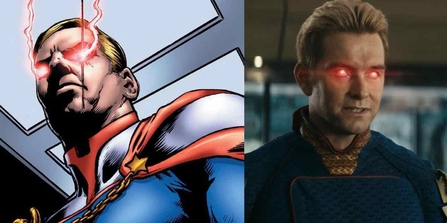
Homelander
The Boys · What unchecked capability looks like in a human.
Homelander

I'm the strongest person in the world. Who could stop me?

Homelander's verdict on warrantless tracking: Of course you use the data. You have it. Who's going to stop you? The carrier has it, the database is right there, the suspect is probably guilty. The Fourth Amendment is a polite suggestion when capability outruns oversight. This is the framework the Court rejected.

Lens 2 · Virtue Ethics
Uncle Iroh
Avatar: The Last Airbender · Aristotelian virtue made human.
Uncle Iroh

Pride is not the opposite of shame, but its source.

Iroh's verdict on building the surveillance state: The question isn't "is it legal?" The question is: what kind of engineer am I if I help build this? Will the version of me that retires from this job be proud of the systems I shipped? Iroh isn't asking the system. He's asking the person.

Why these two lenses together
Homelander shows you the failure mode if you optimize for capability. Iroh gives you the protocol to avoid becoming Homelander. The first describes the trap; the second describes the way out. Carpenter is constitutional law catching up with what Iroh would have told the engineers years earlier.
Slide 9 of 15 · Carpenter: Takeaway
Carpenter: Where This Leaves You
Three operational anchors for IT professionals who build data-collecting systems.
Privacy by Default
Collect the minimum. Retain the shortest. Encrypt by default. If a feature works without storing location, don't store location. If it works with seven days of retention, don't retain ninety. Every byte you don't collect is a byte the government can't subpoena later.
Iroh's Question
Would the version of me ten years from now be proud of this design? Ask it about the feature you're building right now. If the answer is "depends on who buys the company," redesign the feature so the answer is "yes regardless."
The Carpenter Line
Aggregated location data is now warrant-protected. Healthcare records, biometrics, and minor-targeted data are also walking up to similar lines. Design as though the Court will catch up — because it will.
Code Anchor
ACM Code 1.6: "Respect privacy. The responsibility of respecting privacy applies to computing professionals in a particularly profound way." IEEE Code 1: "Hold paramount the safety, health, and welfare of the public." Both codes are Iroh, not Homelander.
Slide 10 of 15 · Case 3: Freedom of Expression
Section 230: The 26 Words That Built the Internet
The most-fought-over 26 words in tech law. Everyone wants to amend them. Almost no one agrees how.
47 U.S.C. § 230(c)(1): "No provider or user of an interactive computer service shall be treated as the publisher or speaker of any information provided by another information content provider." Passed in 1996. The legal foundation that made YouTube, Facebook, Reddit, Wikipedia, and every comment section possible — because platforms cannot be sued for what their users post. Both political parties now want to rewrite it. They disagree on direction.
What 230 protects
Platforms aren't liable for user-generated content. A platform can host millions of posts without reading each one. A platform can moderate "in good faith" without becoming a publisher. Without 230, platforms either lock down or shut down.
What critics want changed
From the left: remove protection for amplified hate, disinformation, harassment. Make platforms accountable for what their algorithms boost. From the right: remove protection from platforms that moderate too aggressively. Make them "neutral" or lose the shield.
The IT professional's stake
You build the moderation systems. You write the algorithms that amplify some posts and bury others. Section 230 is the legal scaffold around your design choices. Whatever Congress does next, the design choices are still yours.
The framing question
Two frameworks for a hard case. Civil War (Tony vs Steve) says: the tension is the answer. Light Yagami says: be very careful about who gets to judge speech, even with good intentions.
Slide 11 of 15 · Section 230 × Two Lenses
Civil War vs Light Yagami
Social-contract tension vs vigilante justice. Two lenses on the moderation problem.
Lens 1 · Social Contract
Civil War: Tony vs Steve
The Sokovia Accords are a 90-minute social-contract argument.
Captain America in Civil War

Both characters are right. Both are wrong. That's the framework.

Civil War's verdict on Section 230: Tony's position — platforms must be accountable, oversight is required — is the case for amending 230. Steve's position — centralized judgment of speech is more dangerous than the harms it prevents — is the case for preserving 230. The tension between them is not noise. It IS the question. Whatever you build, you've taken a side.

Lens 2 · Vigilante Justice
Light Yagami
Death Note · What happens when a smart, idealistic person decides — alone — what right looks like.
Light Yagami

I am Justice.

Light's verdict on algorithmic moderation: The platform decides what's true. The platform decides what's allowed. The platform decides who is amplified. No appeals court. No due process. No transparency about why. This is Light writing in the Death Note at scale. Even when the platform is right, the unaccountability is the failure.

The unresolvable tension
Civil War says the tension is the point. Light says watch out for whoever resolves it. Both lenses are warning you about different failures: the failure to act (Civil War) and the failure to constrain who acts (Light). Section 230 will get rewritten. The design choices outlast the statute.
Slide 12 of 15 · Section 230: Takeaway
Section 230: Where This Leaves You
Platform engineers are the moderation policy. The law is downstream of your decisions.
You Are the Policy
The ranking algorithm IS the speech policy. What you amplify, you endorse at scale. What you suppress, you ban without due process. Engineers writing recommendation systems are making First Amendment-shaped decisions every sprint.
Build for Transparency
Document your moderation criteria. Publish appeal processes. Make removals reversible by default. Whatever Congress does to 230, transparency-by-design is the version of moderation Light cannot become.
The Civil War Test
Is your moderation defensible to BOTH a Tony Stark and a Steve Rogers? If Tony approves but Steve objects, you've over-moderated. If Steve approves but Tony objects, you've under-moderated. Hit the seam, you've probably gotten the balance roughly right.
Code Anchor
ACM Code 1.2: "Avoid harm. In this document, 'harm' means negative consequences, especially when those consequences are significant and unjust." Both ends of the 230 debate cite this clause. The disagreement is which harm dominates — harm from speech, or harm from suppression. Pick consciously.
Slide 13 of 15 · Synthesis
When Frameworks Disagree
The pattern across all three cases. The disagreement isn't a bug. It's the signal.
Pattern 1 · Hard cases SPLIT
Easy ethical cases have framework consensus. Hard cases have framework disagreement. If you've checked utilitarianism, deontology, and virtue ethics and they all agree — you're not in a hard case. The hard case is where they disagree.
Pattern 2 · Two lenses minimum
Single-lens analysis is how Levandowski talked himself into 14,000 file downloads. Anyone can find ONE framework that endorses what they wanted to do. The professional move is running at least two, especially when they conflict.
Pattern 3 · Aim for defensible
"Right" is what you tell yourself before the lawsuit. "Defensible" is what survives the lawsuit, the press, the deposition, and your own retirement conscience. The repeatable process aims for defensible — one you can explain to all three audiences without flinching.
The repeatable decision protocol (from Week 1)
1. What's the actual decision — not the rationalization? 2. Run it through at least two frameworks. 3. If they agree, the answer is easy. 4. If they disagree, the disagreement IS the question — choose which framework dominates here, and write down why. 5. Can you defend this to future you, your peers, and the public? If yes, ship. If no, redesign.
Slide 14 of 15 · In-Class Assignment
Your Dual-Lens Case Analysis
Pick a real W2 case we did NOT cover. Run it through two frameworks. 20 minutes, pair-share.
Your task: Pick one Week 2 case from the list below. With your partner: name two frameworks that would give DIFFERENT verdicts. Sketch each framework's verdict, then write the defensible synthesis. Whiteboard or paper; 15 min pair work + 5 min table report-out.
Utilitarianism
Thanos. Greatest good for the greatest number. Sum the consequences.
Deontology
Cap. Duty regardless of outcome. Rules over results.
Virtue Ethics
Iroh. What would a person of good character do?
Social Contract
Civil War. Negotiated rules between people with shared stakes.
Ends-Justify-Means
Itachi. The math that wins, paid for by the math-doer.
Case Options (pick one)
IP: Plagiarism in IT · Reverse engineering · Open source license violation · DMCA anti-circumvention. Privacy: HIPAA breach response · GDPR right-to-erasure · COPPA enforcement · FERPA in EdTech. Free Expression: Algorithmic amplification · Hate speech moderation · Online anonymity protections · Online defamation.
Required Anchors (your output must hit all five)
1. One-sentence case summary. 2. Framework A verdict (which character, what it would say). 3. Framework B verdict (different character). 4. Where the two frameworks disagree (the actual ethical question). 5. Defensible synthesis: which framework dominates here, and why?
Format · Time
15 minutes pair work (whiteboard or paper sketch is fine). 5 minutes table report-out — one pair shares their case + which frameworks they ran + the synthesis. No grading during class — instructor may collect for follow-up.
Facilitator anchor: The depth check is anchor 4 ("where they disagree"). Strong students will name a real tension; weak students will pick two frameworks that both happen to agree. If a pair reports both frameworks giving the same verdict, push back — they've either picked a soft case or they're collapsing the analysis. Force the disagreement before they synthesize.
Slide 15 of 15 · Looking Ahead
Looking Ahead to Week 3
Week 2 was about rights. Week 3 is about what your software DOES to people.
IT Impact on Society
The systemic effects of software at scale: labor displacement, surveillance capitalism, digital divides. Frameworks: still Thanos and Cap, but now asking "who pays for innovation, and who benefits?"
Software Development Ethics
Inside the building process: technical debt as ethical debt, dark patterns, accessibility as a duty, the responsibility of estimates. The professional's day-to-day ethics, not just the courtroom-level cases.
Week 3 Checkpoint
The Week 3 quiz will test framework application across cases (not framework names from a list). Bring the dual-lens habit you practiced today — that's the working skill the rest of the course tests.
Before class next week
Complete the Week 2 Quiz. Review the topic decks (Privacy / Freedom of Expression / Intellectual Property) for any framework that felt thin in your pair work. Read one case from the Week 3 list ahead so you arrive primed.